
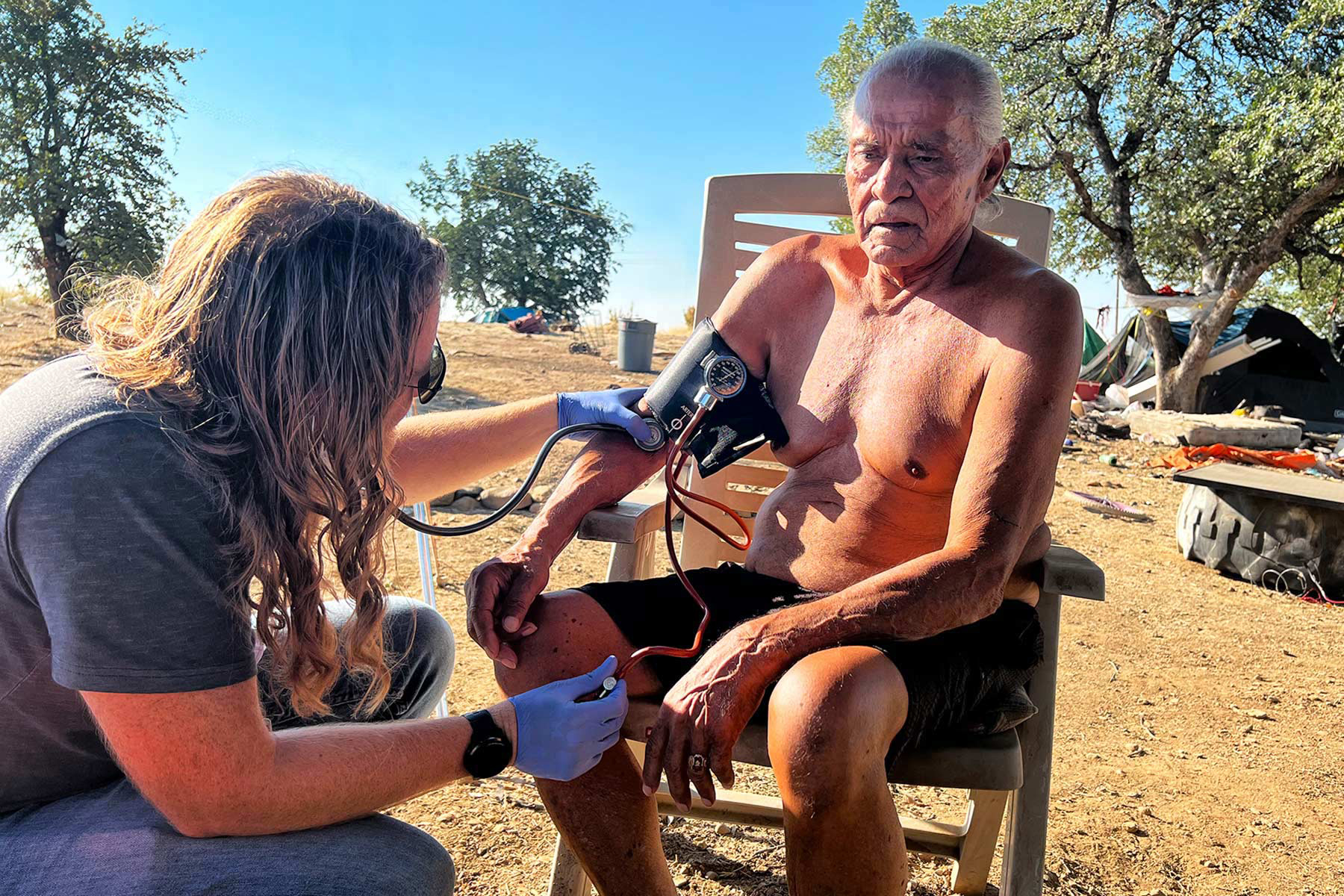
In Syracuse, NY, David Lehmann, MD, does his work within the streets as a part of his tenured place at Upstate Medical College. However he’s fast to acknowledge that not all avenue drugs applications have that luxurious.
For instance, in Redding, CA, Kyle Patton, MD, spends a lot of his time searching for state and federal funding sources in addition to grants and donations — time he’d fairly spend out treating folks in want.
A part of the issue is that it is exhausting to receives a commission for treating folks on the streets. Many unsheltered folks mechanically qualify for federally funded well being care (Medicare and Medicaid). However in an effort to invoice for care, medical suppliers want to provide a Place of Service Code — and there is not any code for “out within the streets.”
“The care we’re offering is reimbursable, however due to the situation the place we offer it, we won’t be reimbursed,” says Brett J. Feldman, MSPAS, PA-C, director of The College of California’s Division of Avenue Drugs.
It is a catch-22: Many unsheltered purchasers will not come to a medical facility for remedy, both on account of concern, lack of know-how, or psychological well being points. And but when medical suppliers are prepared and prepared to exit into the streets to deal with them, they can not receives a commission.
The predictable result’s that funding avenue drugs applications is a continuing wrestle with no nationwide mannequin. The Place of Service requirement threatens present “avenue drugs” applications and prevents new ones, Feldman says.
That is why USC Avenue Drugs along with the Avenue Drugs Institute have led an effort with greater than 500 others to ask Facilities for Medicare and Medicaid Providers (CMS) to both amend an present code or add a brand new one that may permit suppliers to invoice for care within the streets.
The request was submitted in January 2022, however no resolution had been made as of September.
