
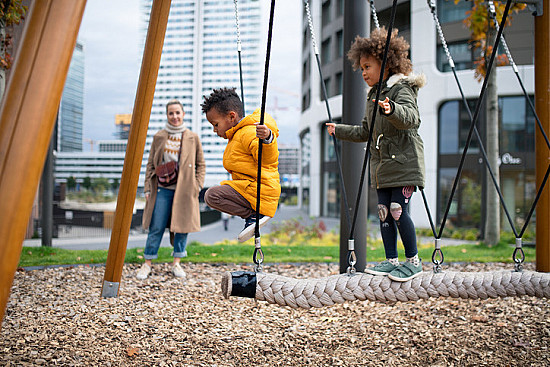
Analysis suggests common out of doors time lowers danger for myopia, a imaginative and prescient drawback on the rise worldwide.

Seems that when your mom advised you to cease sitting close to the TV otherwise you may want glasses, she was onto one thing.
Myopia, or nearsightedness, is a rising drawback worldwide. Whereas a nearsighted youngster can see shut objects clearly, extra distant objects look blurry. A part of this rising drawback, in keeping with specialists, is that kids are spending an excessive amount of time indoors taking a look at issues near them reasonably than going exterior and taking a look at issues which can be far-off.
What’s nearsightedness?
Nearsightedness is quite common, affecting about 5% of preschoolers, 9% of school-age kids, and 30% of teenagers. However what worries specialists is that over the previous few many years its world prevalence has doubled — and in the course of the pandemic, eye medical doctors have seen a rise in myopia.
Nearsightedness occurs when the eyeball is simply too massive from entrance to again. Genes play an enormous position, however rising analysis exhibits that there are developmental elements. The stereotype of the nerd sporting glasses truly bears out; analysis exhibits that the extra years one spends in class, the upper the chance of myopia. Research additionally present, much more reliably, that spending time outside can lower a baby’s danger of growing myopia.
Why would out of doors time make a distinction in nearsightedness?
Whereas stunning, this truly makes some sense. As kids develop and alter, their existence have an effect on their our bodies. A toddler who’s undernourished, for instance, could not develop as tall as they may have if they’d higher nourishment. A toddler who develops weight problems throughout childhood is way extra more likely to have lifelong weight problems. And the eyes of a kid who’s at all times taking a look at issues near her or him may regulate to this — and lose some potential to see far-off.
Nearsightedness has actual penalties. Not solely can it trigger issues with on a regular basis duties that require you to see various toes away, comparable to faculty or driving, however individuals with myopia are at greater danger of blindness and retinal detachment. The issues can’t at all times be mounted with a pair of glasses.
What can mother and father do?
- Ensure that your youngster spends time outside usually — daily, if doable. That’s the easiest way to ensure that they have a look at issues far-off. It’s additionally a good way to get them to be extra energetic, get sufficient Vitamin D, and study some necessary life expertise.
- Attempt to restrict the period of time your youngster spends near a display screen. As of late, a number of schoolwork is on screens, however kids are additionally spending far an excessive amount of of their playtime on units reasonably than enjoying with toys, drawing, or different actions. Have some floor guidelines. The American Academy of Pediatrics recommends not more than two hours of leisure media a day, and has an awesome Household Media Plan to assist households make this occur.
- Have your youngster’s imaginative and prescient checked usually. Most pediatricians do common imaginative and prescient screening, however you will need to do not forget that primary screening can miss imaginative and prescient issues. It’s a good suggestion on your youngster to have a full imaginative and prescient examination from an ophthalmologist or an optometrist by kindergarten.
- Name your pediatrician or youngster’s eye physician in case you discover indicators of a doable imaginative and prescient drawback, comparable to
- sitting near the tv or holding units near the face
- squinting or complaining of any problem seeing
- not having the ability to determine objects far-off (if you go for walks, play I Spy and level to some far-away issues!)
- avoiding or disliking actions that contain trying shut, like doing puzzles or taking a look at books, which generally is a signal of hyperopia (farsightedness)
- tilting their head to take a look at issues
- protecting or rubbing a watch
- one eye that turns inward or outward.
When you’ve got any questions or considerations about your youngster’s imaginative and prescient, discuss to your pediatrician.
Comply with me on Twitter @drClaire
