
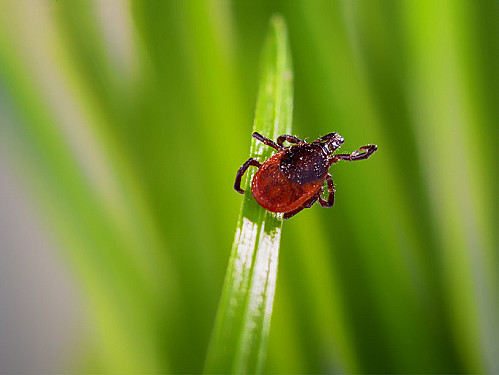
A lesser-known tick-related sickness than Lyme illness is showing in new components of the US.
 Chances are you’ll be aware of Lyme illness, a bacterial an infection from the chunk of an contaminated black-legged tick. Whereas Lyme illness is essentially the most generally reported tick-borne sickness in america, one other is on the rise: babesiosis. A March 2023 CDC report reveals that babesiosis now has a foothold in 10 states within the Northeast and Midwest.
What’s babesiosis?
Babesiosis is an sickness attributable to a parasite (usually Babesia microti) that infects pink blood cells. It’s unfold by contaminated black-legged ticks (deer ticks). Usually, the tick should be connected to an individual for at the least 36 hours to transmit the parasite.
What are the indicators and signs of babesiosis?
“Chances are you’ll or could not see the tick chunk mark in your pores and skin, so your signs could be the earliest signal of an an infection,” says Dr. Nancy A. Shadick, a rheumatologist and director of the Lyme Illness Prevention Program at Harvard-affiliated Brigham and Girls’s Hospital.
Some folks with babesiosis expertise no signs, however the most typical signs are a mix of
- extreme flulike signs comparable to a excessive fever (as much as 104° F), chills, and sweats, significantly night time sweats
- basic discomfort or feeling unwell
- intense headache
- muscle and joint ache
- lack of urge for food
- nausea
- fatigue.
These signs can seem inside one to 9 weeks, and even a number of months after an individual has been contaminated.
Much less usually, babesiosis causes hemolytic anemia. On this type of anemia, pink blood cells are destroyed sooner than the physique can change them. Indicators and signs embrace
- fatigue
- dizziness
- weak spot
- darkish urine
- yellowing pores and skin and whites of the eyes.
Babesiosis is usually a extreme, life-threatening illness, significantly for adults over age 65 and folks with weakened immune methods, comparable to folks and not using a spleen and people receiving organic remedy or chemotherapy.
Why are circumstances of babesiosis rising?
Till just lately, babesiosis was endemic (persistently current) in seven states: Connecticut, Massachusetts, Minnesota, New Jersey, New York, Rhode Island, and Wisconsin.
Nevertheless, the CDC report added three extra Northeastern states to the checklist — Maine, New Hampshire, and Vermont — the place case charges between 2011 and 2019 matched and even surpassed the opposite seven states. Vermont circumstances rose from two to 34, Maine circumstances from 9 to 138, and New Hampshire circumstances from 13 to 78. The pattern is worrisome.
There are a number of causes for the rise in babesiosis. “One is warming temperatures pushed by local weather change, which trigger ticks to be extra lively earlier within the spring and later within the fall,” says Dr. Shadick. Different contributors are a rise within the variety of whitetail deer and an increase in housing building in wooded areas.
How is that this tick-borne sickness recognized and handled?
Babesiosis is recognized by a blood check.
It might be handled with particular antibiotics (completely different than these used for Lyme illness), or with an antibiotic and antimalarial remedy. Whereas therapy normally takes seven to 10 days, an extended course could also be really helpful for people who find themselves immunocompromised.
Are you able to get Lyme illness and babesiosis?
Sure, although you may additionally get both one by itself. Some black-legged ticks that carry the Lyme bacterium (Borrelia burgdorferi) additionally could carry the Babesia parasite, in keeping with Dr. Shadick. “Lyme illness additionally shares comparable signs with babesiosis, comparable to fever, headache, and fatigue,” she says.
How are you going to stop tick-borne sicknesses?
Tick publicity can happen year-round, however ticks are most lively throughout hotter months. Most circumstances of babesiosis happen from late spring via early autumn.
Ticks reside in grassy, brushy, or wooded areas. Nearly any out of doors exercise can expose you or your pets to contaminated ticks, comparable to tenting, strolling your canine, and gardening.
To keep away from babesiosis and different tick-borne ailments, the CDC affords the following pointers:
- Use insect repellents really helpful by the Environmental Safety Company (EPA) containing DEET, picaridin, IR3535, oil of lemon eucalyptus (OLE), para-menthane-diol (PMD), or 2-undecanone. Deal with clothes and equipment with merchandise containing 0.5% permethrin. Permethrin can deal with boots, clothes, and tenting gear and stay protecting via a number of washings.
- Put on light-colored pants and long-sleeved shirts and a hat throughout out of doors actions.
- Attempt to keep away from wooded and brushy areas with excessive grass and leaf litter. Stroll within the middle of trails.
- Examine clothes, pets, backpacks, and equipment for ticks after spending time open air.
- Once you come indoors, take away footwear and put garments within the dryer on excessive warmth for 10 minutes to kill ticks.
- To take away a tick, use fine-tipped tweezers to understand the tick as near the pores and skin’s floor as potential. Pull upward with regular, even stress. Do not twist or jerk the tick, as this will trigger the mouth-parts to interrupt off and stay within the pores and skin. Clear the chunk space with rubbing alcohol or cleaning soap and water. Bathe inside two hours after coming indoors to assist take away any unattached ticks. Use the chance for a full-body tick verify.
For in-depth details about stopping, treating, and dwelling with a tick-borne sickness like Lyme illness or babesiosis, see the Lyme Wellness Initiative at Harvard Well being Publishing.
