
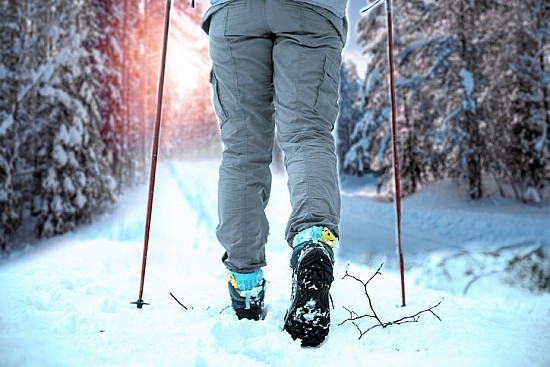
Find out how to safely discover the fun of winter climbing.
 By midwinter, our urge to hibernate can begin to really feel constricting as an alternative of cozy. What higher antidote to being cooped up indoors than a bracing hike within the crisp air outdoor?
Winter backdrops are stark, serene, and infrequently beautiful. With fewer individuals on the path, it’s possible you’ll spot extra creatures out and about. And it’s a first-rate alternative to have interaction with the seasons and our dwelling planet round us, says Dr. Stuart Harris, chief of the Division of Wilderness Drugs at Massachusetts Basic Hospital. However a multi-mile trek by means of tough, frosty terrain is much totally different than warm-weather climbing, requiring consideration of well being and security, he notes. Right here’s what to know earlier than you go.
Winter climbing: Security first
“The problem of climbing when environmental situations are a little bit extra demanding requires a really totally different strategy on a winter’s day versus a summer time’s day,” Dr. Harris says. “But it surely offers us an opportunity to be immersed within the dwelling world round us. It’s our historic heritage.”
A security-first angle is very vital when you’re climbing with others of various ages and talents — say, with older family or young children. It’s essential to have each the suitable gear and the suitable mindset to make it pleasing and protected for all concerned.
Planning and preparation for winter hikes
Put together nicely beforehand, particularly when you’re mixing contributors with vastly totally different health ranges. Plan your route fastidiously, somewhat than simply winging it.
Folks on the extremes of age — the very outdated or very younger — are most weak to frigid temperatures, and cold-weather climbing could be extra taxing on the physique. “Winter situations could be extra demanding on the guts than a perfectly-temperatured day,” Harris says. “Be aware of the bodily capabilities of everybody in your group, letting this outline the place you go. It’s alleged to be enjoyable, not a punishing exercise.”
Earlier than setting out:
- Know the way far, excessive, and distant you’re going to go, Dr. Harris advises, and test the forecast for the world the place you’ll be climbing, taking wind chill and velocity under consideration. Significantly at greater altitudes, climate can change from hour to hour, so hold abreast of expectations for temperature ranges and any precipitation.
- Know when you’ll have entry to emergency cell protection if something goes mistaken.
- At all times share plans with somebody not in your hike, together with anticipated route and time you’ll return. Fill out trailhead registers so park rangers may also know you’re on the path in case of emergency.
What to put on for winter hikes
Put together for extremes of chilly, wind, snow, and even rain to keep away from frostbite or hypothermia, when physique temperature drops dangerously low.
- Gown in layers. A number of skinny layers of clothes are higher than one thick one. Peel off a layer once you’re feeling heat in excessive solar and add it again when in shadow. Ideally, put on a base layer constituted of wicking cloth that may draw sweat away from the pores and skin, adopted by layers that insulate and shield from wind and moisture. “As they are saying, there’s no dangerous climate, simply inappropriate clothes,” Dr. Harris says. “Take a day pack or rucksack and throw a few further thermal layers in. I by no means head out for any hike with out some skill to alter because the climate adjustments.”
- Shield head, arms, and toes. Put on a wool hat, a thick pair of gloves or mittens, and two pairs of socks. Deliver dry spares. Your boots needs to be waterproof and have a rugged, grippy sole.
- Put on sunscreen. You possibly can nonetheless get a sunburn in winter, particularly in locations the place the solar’s glare displays off the snow.
Carry necessities to assist guarantee security
- Additional meals and water. Climbing within the chilly takes critical vitality, burning many extra energy than the identical exercise achieved in summer time temperatures. Pack nutrient-dense snacks akin to path combine and granola bars, which frequently mix nuts, dried fruit, and oats to supply wanted protein, fats, and energy. It’s additionally key to remain hydrated to maintain your core temperature regular. Bonus factors for bringing a heat drink in a thermos to heat your core when you’re chilled.
- First help package. Bandages for slips or scrapes on the path and heat-reflecting blankets to cowl somebody displaying indicators of hypothermia are smart. Even in above-freezing temperatures, hypothermia is feasible. Look ahead to indicators akin to shivering, confusion, exhaustion, or slurring phrases, and search instant assist.
- Gentle supply. Time your hike so that you’re not on the path in darkness. However deliver a lightweight supply in case you get caught. “A flashlight or headlamp is fairly darn helpful when you’re climbing wherever close to the perimeters of daylight,” Harris says.
- Telephone, map, compass, or GPS gadget plus further batteries. Don’t depend on your cellphone for GPS monitoring, however totally cost it in case you should attain somebody shortly. “Just remember to have the know-how and talent set to have the ability to navigate on- or off-trail,” Harris says, “and that you’ve got a method of out of doors communication, particularly when you’re in a big, blended group.”
