
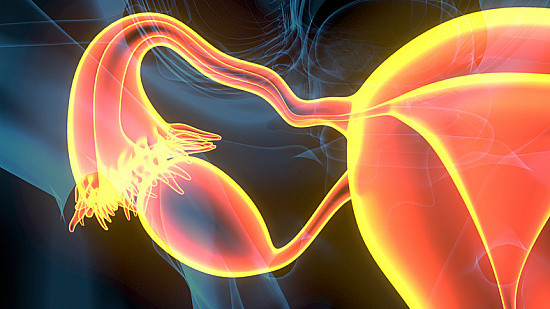
New suggestions spotlight potential advantages.

Ought to a lady take into account having her fallopian tubes eliminated to decrease her threat for creating ovarian most cancers? Latest suggestions from the Ovarian Most cancers Analysis Alliance (OCRA), endorsed by the Society for Gynecologic Oncology, encourage this technique, if ladies are completed having youngsters and could be present process gynecologic surgical procedure anyway for different causes.
Why is that this new steering being provided?
Ovarian most cancers claims about 13,000 lives every year, in line with the American Most cancers Society. The brand new steering builds on established recommendation for girls with high-risk genetic mutations or a robust household historical past of ovarian most cancers.
This concept is not new for girls at common threat for ovarian most cancers, both: in 2019, the American School of Obstetricians and Gynecologists (ACOG) floated this technique in a committee opinion.
A Harvard professional agrees the strategy is sound, contemplating established proof that many instances of aggressive ovarian cancers come up from cells within the fallopian tubes.
“We have identified for a very long time that many hereditary instances of ovarian most cancers probably originate in lesions within the fallopian tubes,” says Dr. Katharine Esselen, a gynecologic oncologist at Beth Israel Deaconess Medical Heart. “Though we group all of those cancers collectively and name them ovarian most cancers, lots really begin within the fallopian tubes.”
Can ovarian most cancers be detected early by means of signs or screening?
No — which helps gas these suggestions.
Ovarian most cancers is notoriously tough to detect. Signs are usually obscure and might be associated to many different well being issues. Indicators embrace bloating, pelvic ache or discomfort, adjustments in bowel or bladder habits, feeling full earlier when consuming, fatigue, uncommon discharge or bleeding, and ache throughout intercourse.
Disappointing outcomes from a big 2021 research in the UK reported in The Lancet present that reducing the dangers of a late-stage prognosis is not straightforward. The trial tracked greater than 200,000 ladies for a mean of 16 years. It discovered that screening average-risk ladies with ultrasound and a CA-125 blood check would not scale back deaths from the illness. By itself, the CA-125 blood check is not thought-about dependable for screening as a result of it isn’t correct or delicate sufficient to detect ovarian most cancers.
Solely 10% to twenty% of sufferers are identified at early phases of ovarian most cancers, earlier than a tumor spreads, Dr. Esselen notes. “There’s by no means been a mixture of screenings that has reliably recognized nearly all of these cancers early, once they’re extra treatable,” she says.
What does it imply to be at greater threat for ovarian most cancers?
Household historical past is the highest threat issue for the illness, which is identified in almost 20,000 American ladies yearly. A lady is taken into account at greater threat of ovarian most cancers if her mom, sister, grandmother, aunt, or daughter has had the illness.
Moreover, inherited mutations within the BRCA1 or BRCA2 gene elevate threat significantly, in line with the Nationwide Most cancers Institute. (These mutations are extra frequent amongst sure teams, together with individuals of Ashkenazi Jewish heritage.) Whereas about 1.2% of girls general will develop ovarian most cancers of their lifetime, as much as 17% of these with a BRCA2 mutation and as much as 44% with a BRCA1 mutation will accomplish that by ages 70 to 80.
How a lot can surgical procedure decrease the percentages of ovarian most cancers?
It isn’t clear that all ladies — even these not scheduled for surgical procedure — ought to endure removing of their fallopian tubes to cut back this threat as soon as they end having youngsters, Dr. Esselen says. This surgical procedure cannot completely eradicate the opportunity of ovarian most cancers — and surgical procedure carries its personal dangers. She recommends discussing choices along with your physician relying in your degree of threat for this illness:
For these at common threat for ovarian most cancers: Out there knowledge appear to assist the thought of eradicating the fallopian tubes. Research of girls who underwent tubal ligation (“tying the tubes”) or removing to keep away from future pregnancies point out their future dangers of ovarian most cancers dropped by 25% to 65% in comparison with their friends. And if a lady is already present process gynecologic surgical procedure, resembling a hysterectomy, the potential advantages probably outweigh the dangers.
Earlier than menopause, eradicating the fallopian tubes whereas leaving the ovaries in place is preferable to eradicating each. That is as a result of estrogen produced by the ovaries may also help shield towards well being issues resembling heart problems and osteoporosis. Leaving the ovaries additionally prevents abruptly experiencing signs of menopause.
“The fallopian tubes do not produce any hormones and are not actually wanted for something apart from transporting the egg,” she says. “So there’s little draw back to eradicating them on the time of one other gynecologic process if a lady is not concerned with fertility.”
For these at excessive threat for ovarian most cancers: “In a world the place we do not have good screening instruments for ovarian most cancers, it is sensible to do one thing as dramatic as surgical procedure to take away each ovaries and fallopian tubes when a lady is understood to be at greater threat due to a robust household historical past or a BRCA gene mutations,” Dr. Esselen says.
Presently, preliminary proof suggests it might be secure to proactively take away the fallopian tubes whereas delaying removing of the ovaries to nearer to the time of menopause to keep away from an early menopause. Nonetheless, it is unclear how a lot this process lowers the percentages of creating ovarian most cancers.
“Usually, the findings to date have centered on the protection of the surgical procedure itself and ladies’s high quality of life,” Dr. Esselen says. “Lengthy-term knowledge in high-risk ladies takes a large number of years to build up. We want this knowledge to know whether or not eradicating the fallopian tubes alone is equally efficient in stopping ovarian most cancers as eradicating the tubes and ovaries.”
Discussing your choices is vital
In the end, Dr. Esselen says that she advocates OCRA’s new suggestions. “For anybody who’s accomplished childbearing, if I am doing surgical procedure that would not essentially embrace routinely eradicating their fallopian tubes, I am providing it,” she says. “A lady and her physician ought to all the time focus on this on the time she’s having gynecologic surgical procedure.”
